Boundaries: Punctuation: what the SAT is testing
Boundaries: Punctuation belongs to SAT Grammar practice in SAT Reading & Writing. This page is a theory checkpoint: read it, use the example, then jump into practice while the pattern is fresh.
Boundary questions test how clauses and phrases connect. The SAT expects you to recognize complete sentences, fragments, supplements, and punctuation marks that legally join or separate them.
On test day, this skill should feel like a sequence of decisions rather than a vague topic. First identify the task, then choose the representation or rule, then check the answer against the exact wording of the question.
Fast rule: if you cannot explain what the question is asking in one sentence, do not start solving yet.
Key ideas to remember
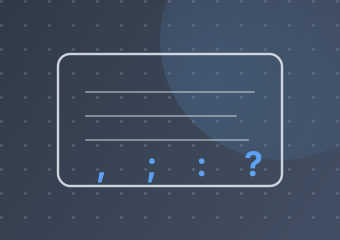
- A comma alone cannot join two complete sentences.
- A semicolon can join two closely related complete sentences.
- A colon introduces an explanation, list, or result after a complete sentence.
- Dashes and commas can set off nonessential information.
- Subordinating conjunctions can turn a complete sentence into a dependent clause.
Worked SAT-style example
Example. "The sample was small; the results were still useful" is correct because both sides are complete sentences. "The sample was small, the results were still useful" is a comma splice.
SAT move. Identify whether each side of the punctuation could stand alone.
Why it works. The example is short because the setup is doing most of the work. SAT questions often become difficult only when the setup is hidden inside extra wording.
Step-by-step method
- Read the prompt first. Know whether the question asks for meaning, evidence, grammar, structure, or purpose.
- Use local context. Most answers are decided by the sentence or two around the blank or claim.
- Predict the job. Say what the answer must do before reading the choices.
- Eliminate precisely. Name why each wrong answer fails: scope, tone, logic, grammar, or evidence.
- Read it back. Insert the answer and make sure the whole sentence or passage still works.
SAT tips
- Find the subject and verb on both sides.
- Use a semicolon only between complete sentences.
- Use matching punctuation around nonessential information.
- If a clause begins with "although" or "because," it usually needs an independent clause to complete the idea.
- Read without the supplement to see whether the main sentence still works.
One useful habit is to pause for two seconds before looking at answer choices. That pause lets your own setup or prediction lead, instead of letting four tempting options pull you around.
Common traps
- Using a comma to join two sentences.
- Separating a subject from its verb with a single comma.
- Using a colon after an incomplete setup.
- Opening a dash pair but not closing it.
- Mistaking a long phrase for a complete sentence.
How to review this skill
After a practice set, sort every missed question into a cause. Was the setup wrong? Did you miss a clue? Did you know the rule but rush? Did you choose an answer that was true but not responsive to the prompt?
Then redo the problem without looking at the explanation. If you can solve it cleanly, change one detail and solve the new version. That proves you learned the pattern, not just the answer.
- One-minute drill: identify the question type and write the first setup step.
- Five-question drill: solve slowly and name the rule used in each question.
- Timed drill: repeat the same skill until the setup becomes automatic.
Second SAT-style example
Second example. "The telescope was powerful; it revealed details that earlier instruments had missed" is correct because both sides are complete sentences. A comma alone would not be strong enough to join them.
What to notice. Boundary questions become simple when you test each side for a subject and verb.
How answer choices try to fool you
- Too broad: the answer is bigger than what the text proves.
- Too narrow: the answer focuses on one detail instead of the whole job.
- True but irrelevant: the statement may be accurate but not answer the prompt.
- Wrong relationship: the choice reverses contrast, cause, sequence, or emphasis.
- Overly formal: polished wording can still be less precise or less grammatical.
Difficulty ladder
- Foundation: identify the direct grammar rule, meaning, or evidence line.
- Medium: compare two plausible choices and eliminate by scope or logic.
- Advanced: handle subtle tone, cross-text relationships, dense notes, or punctuation around complex clauses.
A strong reader does not rush the hard version; they become precise about the clue that controls the answer.
Extra SAT tips
- Read one sentence before and after the underlined portion or blank.
- For grammar, the shortest correct answer is often best, but only after it passes the rule.
- For evidence, make the answer earn every word from the text.
- For transitions, write the relationship in one word: contrast, cause, example, sequence, or emphasis.
- For review, explain why the wrong answer was tempting. That is the habit you need to break.